«Cuando compré este extensor, no tenía ni idea de lo que era el alargamiento del pene. Ni siquiera han pasado dos meses de uso constante y
ya estoy viendo resultados. Estoy muy satisfecho».
Emil Rasmussen, cliente satisfecho
«Me encanta su tamaño compacto, las marcas claras y los tornillos de mariposa grandes. De todos los extensores que tengo, este es mi
favorito».
Jeff Stauffacher, cliente satisfecho
«Una herramienta muy útil que permite saber exactamente cuánta presión está ejerciendo el usuario; además, es cómoda
y se adapta a diferentes tamaños. Una compra excelente tanto para principiantes como para usuarios experimentados».
Roberto Arturo Suárez, cliente satisfecho
Big Sale: 20% Off SitewideCode 20OFF·Ends in 47h 59m 59s
Penis Extender for Peyronie's Disease and a Curved Penis
What 9 clinical studies found about penile traction therapy for a curved penis, how many hours it takes, real before and after results, and how it compares to injections and surgery.
Penile traction, the same pull a penis extender gives, is one of the few treatments for Peyronie's disease without surgery that has controlled studies behind it. Men who wore a traction device every day for 3 to 6 months reduced their curve by about 12 to 31 degrees and gained back 1.5 to 1.8 cm of stretched length, while untreated men stayed the same or got worse. More hours meant more straightening.
It is not a cure, and it does not work for every man. See a urologist first, and plan on months, not weeks.
31°
average curve reduction in 12 weeks of daily traction (Moncada 2019)
+1.8 cm
stretched length gained back in the same study
95%
of men who used traction for 6 months gained length (Joseph 2020)
40%
of men headed for surgery no longer needed it (Martinez-Salamanca 2014)
What Is Peyronie's Disease?
Peyronie's disease (PD) is scar tissue, called plaque, that forms inside the penis in the tunica albuginea, the tough sheath around the erection chambers. The plaque does not stretch, so when you get an erection, the penis bends toward it.
Why a curve formsThe rest of the shaft stretches during an erection. The plaque does not, so the shaft bends toward the plaque.
It can bend the penis up, down or to the side. It can also cause penile pain, a dent or narrowing (an hourglass shape), a soft spot where the shaft buckles (a hinge effect), and penile shortening. Many men also have trouble with erections.
It is more common than most men think. It affects up to 10% of men (University of Utah Health), and most men who get it are 45 or older (Harvard Health). Doctors believe it usually starts with small injuries during sex or sports that heal with scar tissue instead of normal elastic tissue. Age, family history, diabetes and smoking raise the risk, and some men also have scar tissue in the hands, called Dupuytren's contracture, a connective tissue problem.
Symptoms of Peyronie's Disease
A bent penis when erect, up, down or to the side.
A hard lump or band you can feel under the skin of the shaft. This is the penile plaque.
Penile pain, mostly during erections and mostly in the first months.
A dent, a narrow spot or an hourglass shape.
A shorter erect penis than before.
Weaker erections, or a curve that makes sexual intercourse hard or impossible.
How Peyronie's Is Diagnosed
A urologist feels for the plaque and looks at the curve, often in photos of the erect penis or after an injection that causes an erection in the office. An ultrasound shows where the scarring is, whether it has calcium in it, and how blood flows in the penis (Cleveland Clinic). That helps decide the best treatment for you.
The Two Phases of Peyronie's
Acute phase. The first months, often with painful erections and a curve that is still changing. The pain usually fades within about 12 months (RACGP).
Chronic or stable phase. In the chronic phase the curve stops changing and the pain is usually gone. The plaque may harden.
Traction has been studied in both phases. One study treated men in the acute phase, and another treated men whose curve had been stable for months. Your urologist can tell you which phase you are in.
Peyronie's vs a Natural Curve
Some men are born with a curve, called congenital penile curvature. There is no plaque, no pain and no change over time (Cleveland Clinic). A slight curve that does not hurt or get in the way of sex is normal. Peyronie's is different. It shows up later in life, and the bend often changes in the first months.
Does a Penis Extender Work for Peyronie's?
For many men with Peyronie's, yes. Penile traction therapy (PTT), wearing a penile traction device that pulls the penis straight for hours a day, has been tested in several clinical studies, including a randomized trial with a control group. Here is what each one found.
Steady, gentle pull. Months, not days.
Why it works: when tissue is held under gentle, steady tension for months, the body slowly builds new connective tissue. Doctors have seen the same thing with scar tissue in the hand (RACGP). Over time that helps straighten the penis and regain penile length.
Curve change in degrees, length as stretched length. Each study name links to its free abstract. Most studies are small, and only one was randomized.
An Australian guide for doctors sums it up the same way. For motivated men, six months of everyday use of a penile traction device or a vacuum erection device may improve the curve by up to 25%. These devices are also used together with medical treatment, and may help more than medical treatment alone (RACGP).
More Hours, More Straightening
In the Moncada study, the men who wore traction the longest got the biggest change. The curve dropped about twice as much for men who wore it more than 6 hours a day as for men who wore it under 4 hours.
In studies, more hours a day meant more straightening.
Under 4 hours a dayMoncada 201919.7°
Over 6 hours a dayMoncada 201938.4°
Average curve reduction after 12 weeks, by daily wear time.
Can Traction Help You Avoid Surgery?
In men with early Peyronie's, daily traction cut the need for surgery in 40% of the men who were headed for it. For about 1 in 3 men who still needed surgery, it made a smaller operation possible (Martinez-Salamanca 2014). The untreated men in that study got worse. Their curve grew, their stretched length shrank and their pain went up.
What the Reviews Say
A 2021 position statement from the European Society for Sexual Medicine called traction a valid treatment option, but said there is not yet enough evidence for a firm recommendation (Garcia-Gomez 2021). A 2023 meta-analysis of 5 studies and 419 men found that traction clearly improved the curve, while the pooled length gain was not statistically significant (Almsaoud 2023). The American Urological Association guideline from 2015 does not make a recommendation on traction. In plain words, traction helps many men straighten, the length results vary, and bigger trials are still needed.
Penis Extender for Peyronie's Before and After
What a before and after looks like in the studies, and in the words of men in our Discord.
51° → 34°
Average curve before and after 6 months of daily traction, 2 to 8 hours a day. Every man improved, by 10 to 45 degrees (Levine 2008).
33° → 15°
Average curve in early Peyronie's before and after 6 months of traction. Men unable to have sex fell from 62% to 20% (Martinez-Salamanca 2014).
Real Stories From Our Discord
Word for word from members of our Discord. The first man has Peyronie's. The other two describe a natural curve, which is not the same thing, but the straightening they describe is common.
I’ve been using the epic extender. religiously since new years for peyronies. (Straight traction) so far I’ve noticed slight curve reduction and roughly 1/2 inch length gain. (From curve reduction)
Member in our Discord · Epic Extender, Peyronie's
It helped mine. I was slightly curved down and to the right. I no longer curve right and the downward curve isn't as prominent. I kind of hope it doesn't get much straighter. I use a combo of pumping and extending. Typically a little over 1.5 hours a day. Then a 20 minute pumping session.
Member in our Discord · Extender and pump, natural curve
Yes I had a downward curve before starting and that has straighten over time. I made more gains on getting straighter after someone suggested placing a pencil or other object in the opposite spot across the extender.
Member in our Discord · Extender, natural curve
A Before and After Post on Reddit
A man with Peyronie's shared his progress chart in a Peyronie's support group. The post loads straight from Reddit.
Talk to your urologist first. These are the habits that match what the studies did, and what keeps men wearing it long enough to see a change.
Plan on months. The studies ran 3 to 6 months. Some men see a small change early, but most of the change comes later.
Build your daily time. Studies used 30 minutes to 9 hours a day, and more hours gave more straightening. Start with about 1 hour a day and build up, in sessions of 30 to 60 minutes with short breaks.
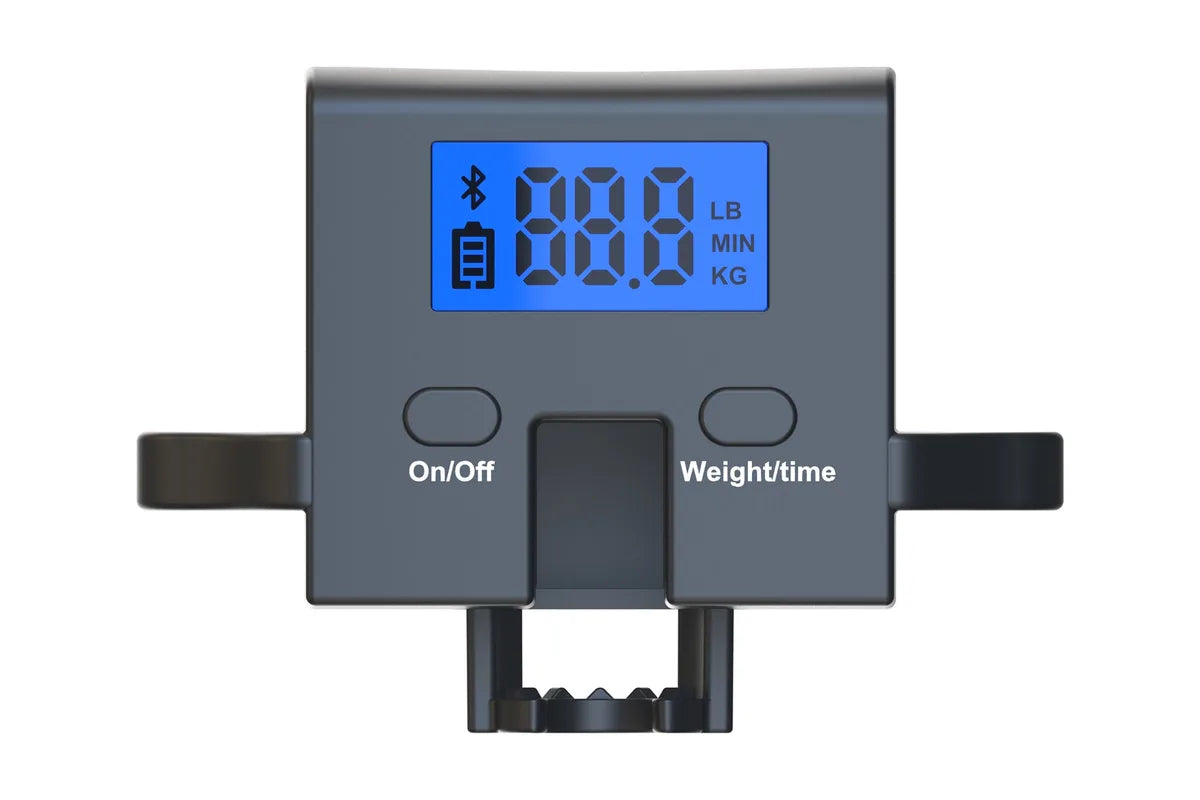
Start with low tension. Begin at 2 to 3 lb and raise it slowly. Tension you can read helps you do this safely. More pull is not better if it hurts.
Pull straight. The studies used straight traction. Some men add a soft object on the opposite side of the curve to add a gentle counter bend. Ask your urologist before you try it.
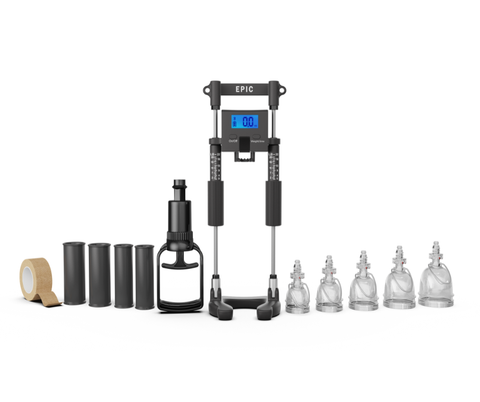
Add hours without more pull. A low-tension stretcher you wear under your clothes is an easy way to add time on busy days.
Track it. Measure your curve and your length once a month, the same way every time. Log your sessions so you know your real hours.
Combine with your doctor's plan. Traction is often used together with injections. Your urologist can tell you how to time them.
A Simple Starting Plan
When
Daily time
Tensión
Weeks 1 and 2
About 1 hour, in 2 sessions
2 to 3 lb, you should barely feel it
Weeks 3 to 6
About 2 hours, in 30 to 60 minute sessions
Raise a little only when it feels easy
Month 2 and on
3 hours or more if it stays comfortable
Steady, never painful
Every month
Measure your curve and length
Same photo setup every time
A starting point, not medical advice. Your urologist may want something different, especially in the acute phase.
How to Measure Your Curve at Home
You cannot see a 5 or 10 degree change in the mirror. A photo and an angle make it clear.
Measure the angleTake a photo from the side of the curve at a full erection. Draw a line along the base of the shaft and another along the tip. The angle between them is your curve.
Use the same position, the same distance and the same light every month.
Phone photo apps and free protractor apps can measure the angle for you.
Measure your stretched length too. Many men regain length as the curve straightens.
Keep the photos private. The PE Trainer app lets you store private progress photos next to your measurements.
Your urologist will measure your curve at a full erection, often after an injection, which is more exact than a home photo.
Peyronie's Disease Treatment Options Compared
Traction is one option among several. Many urologists combine them. Here is how they compare.
From pills to surgery, traction sits in the middle.
Treatment
Para qué sirve
Source
Watch and wait
Some mild cases go away without treatment. It is rare for a severe curve to go away on its own.
Daily traction for months reduced the curve and gave back stretched length in controlled studies. Needs daily time.
Studies above
Collagenase injections
Injection therapy with collagenase clostridium histolyticum, a medicine your urologist injects into the plaque to break it down. Several visits, often with stretching at home. They rarely make the penis fully straight.
Surgery is still the gold standard for a severe penile deformity, usually once the disease is stable and the pain is gone (RACGP). Traction and injections are the main options without surgery.
Natural Remedies for Peyronie's
Vitamins, creams and supplements are popular, but they have limited proof that they straighten the curve. Traction is different because it has been measured in controlled studies, it has no drugs, and you can do it at home. That is why many men try it first, with their urologist's OK.
Peyronie's, Length Loss and Erections
Peyronie's often makes the penis shorter, and many men also notice weaker erections. Traction studies looked at both.
Length. Men gained back 1.3 to 2.0 cm of stretched length in most studies. In one study, 95% of men who used traction for 6 months gained length (Joseph 2020), and in another the gain still held at the 12 month check (Gontero 2009).
Erections. Erectile function scores went up in several studies. In the randomized trial, men who had erectile dysfunction improved their scores while untreated men did not (Ziegelmann 2019).
Hinge effect. In one small study, the soft spot where the shaft buckled was fixed in all 4 men who had it (Levine 2008).
Traction is not a treatment for erectile dysfunction. If erections are a problem, tell your urologist.
Length Loss After Prostate Cancer Surgery
Traction is also studied for men who lose length after prostate cancer surgery. In a randomized trial, men who used daily traction after their prostate was removed gained 1.6 cm of stretched length in 6 months, against 0.3 cm in the control group (Toussi 2021).
Sex and Quality of Life With Peyronie's
A curve can make sexual intercourse painful or impossible, and many men feel it in their mood and their relationship as much as in bed. In the early Peyronie's study above, the share of men who could not have sex dropped from 62% to 20% after 6 months of traction (Martinez-Salamanca 2014). If sex is hard right now, talk to your partner and your urologist. Your sexual health is part of the treatment, not an afterthought.
Is Traction Safe for Peyronie's?
In the studies, adverse events were mild. In the randomized trial they were mild and short-lived (Ziegelmann 2019). In another study, 43% of men had mild problems, mostly discomfort and some numbness in the head of the penis (Moncada 2019).
Start at low tension and build up slowly.
Take a short break every 30 to 60 minutes.
Stop if the head turns cold, numb or starts to tingle.
If you have pain with erections, talk to your urologist before you start.
Ask your doctor first if you have diabetes, a bleeding problem or take blood thinners.
It can help, but it is not a cure. In controlled studies, men who wore a traction device every day for 3 to 6 months reduced their curve and gained back length, while untreated men stayed the same or got worse. Results vary, and some men need injections or surgery. See a urologist before you start.
How long does traction take to work for Peyronie's?
Most studies ran 3 to 6 months. Some men see a small change in the first months, and the bigger changes come with longer use. In one study, men who kept going to 6 months gained about 2 cm of stretched length.
How many hours a day should I wear an extender for Peyronie's?
Studies used anywhere from 30 minutes to 9 hours a day. More time gave more straightening. Men who wore traction more than 6 hours a day straightened their curve about twice as much as men who wore it under 4 hours. Build up slowly and ask your urologist what fits you.
Can Peyronie's disease go away on its own?
Some mild cases go away without treatment, but it is rare for a severe curve to go away by itself. The pain usually fades within about 12 months, and the curve usually stops changing.
Can stretching fix Peyronie's disease?
Steady stretching with a traction device is the most studied form. Short manual stretches are often used with injection treatment, as advised by a doctor. Daily traction for months is what the studies above measured.
What breaks down Peyronie's plaque?
Collagenase injections are the medicine designed to break down the plaque, and they are given by a urologist. Traction works differently. Steady tension over months remodels the tissue and straightens the shaft.
Is Peyronie's disease contagious?
No. It is scar tissue inside the penis, not an infection. You cannot catch it or pass it to a partner.
Is Peyronie's disease permanent?
The scar tissue usually stays, but the curve can often be reduced with treatment. In one study, the length men gained with traction still held at the 12 month check.
What is the best traction device for Peyronie's disease?
The studies used several different devices, and all of them worked when men wore them enough. What matters most is how many hours you can wear it, so comfort counts. A tension you can read helps you build up slowly and safely.
Can a vacuum pump help Peyronie's disease?
A vacuum erection device is another option some urologists use. A guide for doctors says six months of everyday use of a vacuum device or a traction device may improve the curve by up to 25%. Traction is the one with more controlled studies.
Can you straighten a bent penis without surgery?
Often you can make it straighter. Daily traction and injections are the main options without surgery, and many men combine them. A severe curve may still need surgery to be fully straight.
Should I see a doctor before using an extender for Peyronie's?
Yes. A urologist can confirm it is Peyronie's and not a natural curve, tell you which phase you are in, and suggest whether to add injections. Ask before you start if you have pain with erections.
This guide is for information only and is not medical advice. Our products are not intended to diagnose, treat, cure, or prevent any disease. If you think you have Peyronie's disease, see a urologist. Results vary.
Al seleccionar una opción, se actualiza toda la página.